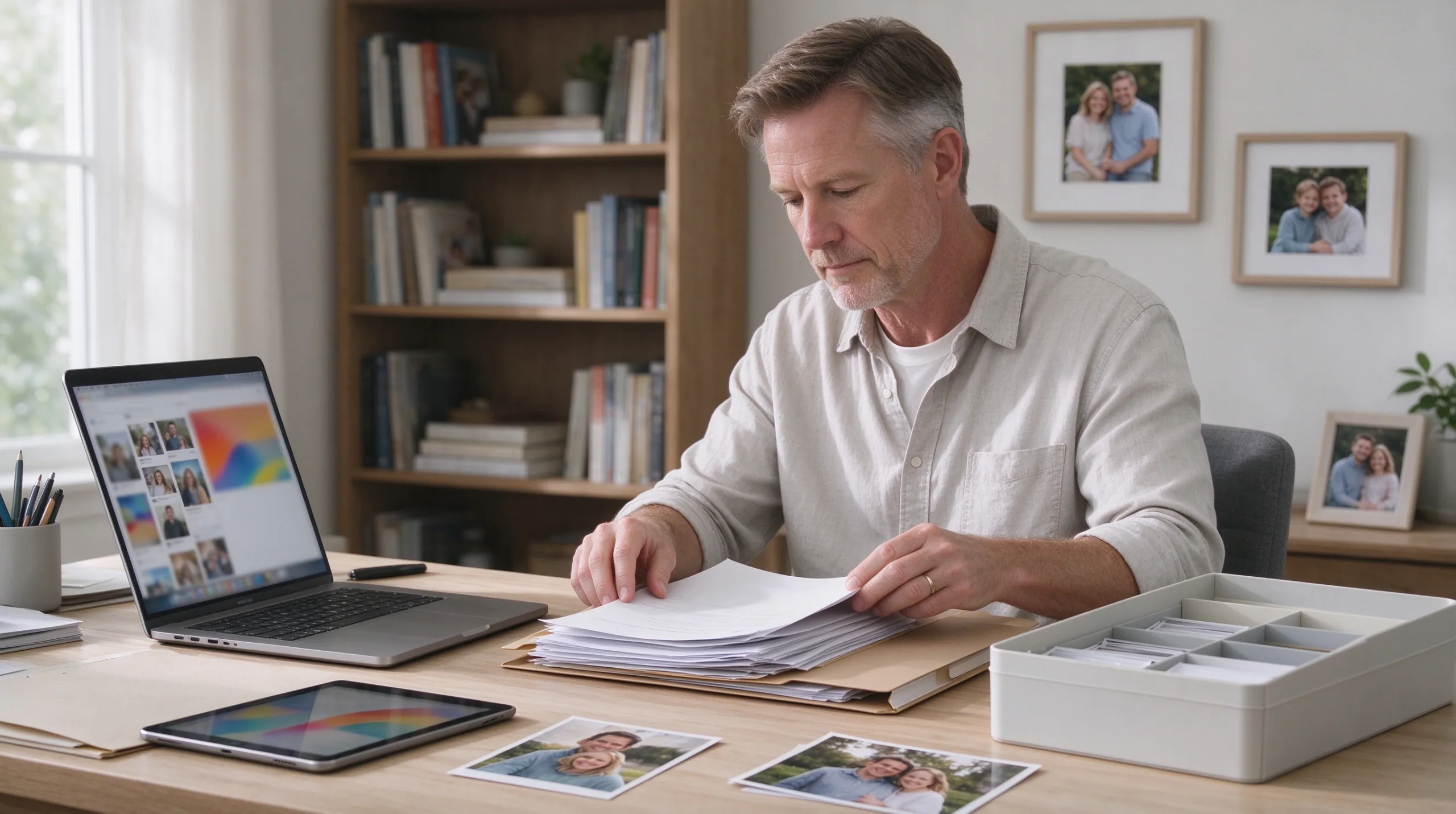
For thirty days I put five digital tools on pause: a dedicated notes app, a task manager, a quick-capture widget, a voice-memo habit for ideas, and the phone’s built-in reminders. In their place I carried a single paper notebook and a reliable pen. The goal was not to prove paper superior or to become an analog purist. The goal was to measure what actually changed in capture reliability, retrieval speed, daily friction, and overall mental load.
The experiment produced clear data. Some things improved immediately. Some things suffered in predictable ways. The lasting result was a hybrid practice that kept the strengths of both mediums and discarded the overlapping digital tools that had been solving the same narrow problems.
The Rules of the Experiment
All new notes, tasks, reminders, and quick ideas went into the notebook. Digital tools could still be used for calendar events, email, and existing reference material already stored there, but nothing new was added to the five paused apps. The notebook stayed with me during the day and lived on the desk at night. At the end of each day I performed a short review of the pages written that day.
What Improved Immediately and Stayed Better
Capture Speed and Reliability
Writing a short note or task required no unlock, no app launch, and no decision about which digital system to use. The friction was noticeably lower. More small items were captured instead of being held in working memory and later forgotten. The notebook became a trusted default because it was always available and never demanded a login or a choice among apps.
Reduced Context Switching
There was no toggling between apps or checking whether something had already been entered elsewhere. One physical place held the open loops for the day. The absence of digital context switching reduced a subtle but constant form of cognitive overhead.
Better Thinking Quality for Certain Work
Longer handwritten notes produced clearer thinking on planning, reflection, and working through decisions. The slower pace of handwriting forced slightly more deliberation. Ideas that would have been dashed off digitally received a second pass simply because the medium made rapid, shallow capture less automatic.
Lower Ambient Digital Noise
With fewer apps demanding attention, the phone felt quieter. Notifications related to the paused tools disappeared. The overall sense of digital obligation decreased even though the calendar and email remained active.
What Suffered and Why
Retrieval of Older Notes
Finding a note from two or three weeks earlier required flipping pages. Search did not exist. For items older than about ten days, retrieval was slower and sometimes failed if the page had not been marked or if the notebook had been filled and set aside. This was the most consistent weakness.
Sharing and Collaboration
Anything that needed to be sent to someone else required transcription into digital form. Shared tasks, information for family members, or notes that had to travel with an email all added an extra step. Pure paper created friction precisely where digital tools are strongest.
Recurring and Time-Based Reminders
Paper does not alert you at 9 a.m. next Tuesday. Recurring tasks and hard deadlines had to be rewritten onto the current page or moved to the digital calendar. This partially broke the “paper only” rule and revealed that time-based reminding is a job paper handles poorly.
Backup and Loss Risk
The notebook could be lost, damaged, or left behind. No automatic backup existed. The risk remained a background concern throughout the month, even though no actual loss occurred.
Week-by-Week Texture of the Experiment
Week 1: Novelty and High Capture Volume
The first week felt liberating. The novelty of a single capture point was high. The volume of notes increased because friction was lower. Daily review was easy because all material was recent and contained in a few pages.
Week 2: Settling into a Usable Rhythm
A simple end-of-day review of the previous pages caught open tasks. Retrieval of recent items remained easy. The system felt sustainable. The absence of digital task apps was not yet painful.
Week 3: Retrieval Limits Appear
A note from early in the experiment was needed and took several minutes of page-flipping to locate. Some items began to be rewritten “just in case.” The lack of search became a concrete cost rather than a theoretical one.
Week 4: The Hybrid Future Becomes Obvious
Paper remained excellent for capture and certain kinds of thinking. Digital remained necessary for search, reliable reminding, and sharing. By the end of the month the pure experiment had served its purpose: it clarified the actual strengths and weaknesses of each medium in daily use.
What Remained After the Month Ended
A Deliberate Hybrid
The notebook stayed as the primary capture tool for quick notes, daily tasks, and reflective writing. A short end-of-day or end-of-week transfer moved any time-sensitive or shareable items into the digital calendar or a single simple digital list. The multiple overlapping apps were not reinstated. One digital notes location was kept for long-term reference material that needed search.
The net result was fewer apps, faster capture, and conscious acceptance that retrieval of older handwritten notes would sometimes require flipping pages or accepting that some items remain useful mainly in the recent past.
Practical Lessons for Anyone Considering a Similar Test
Paper excels at low-friction capture and certain kinds of deliberate thinking. It is weak at search, automatic reminding, and sharing. A pure paper system works only if a person’s actual needs align closely with those strengths. Most adults benefit from a hybrid that assigns each medium the jobs it does best.
The experiment’s greatest value was not the temporary purity. It was the forced confrontation with how many digital tools were solving the same narrow capture problem and how much collective attention they consumed.
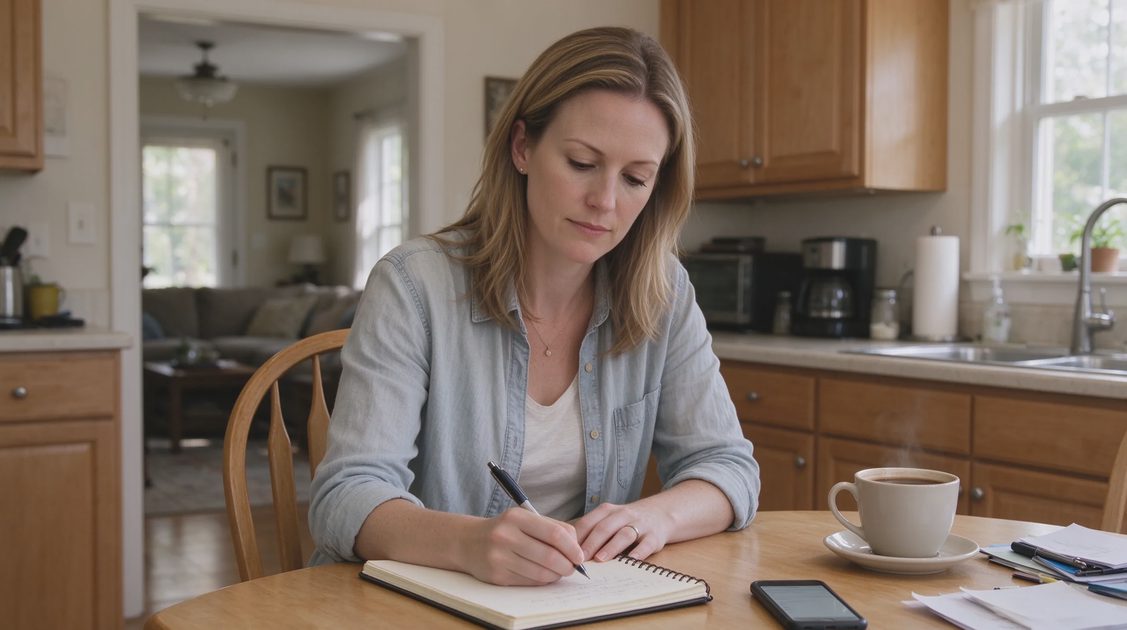
Designing a Hybrid That Survives Ordinary Weeks
Clear Job Assignments
Paper notebook: daily capture, tasks for the current day or week, reflective or planning writing.
Digital calendar: all time-based items and hard deadlines.
One digital notes location: long-term searchable reference.
End-of-day or end-of-week transfer: move anything that must leave paper.
This division keeps the capture benefits of paper while restoring the retrieval and reminder benefits of digital. It also prevents the re-accumulation of multiple overlapping apps.
Why the Hybrid Is More Maintainable Than Either Extreme
Pure digital capture often leads to fragmentation and notification noise. Pure paper creates retrieval and sharing friction. The hybrid accepts the real limitations of both mediums and assigns work accordingly. Because each tool has a narrow, clear job, maintenance stays low.
The Broader Point About Tools and Attention
Digital tools are excellent at scale, search, and automation. They are often worse at the moment of capture and at protecting attention. Paper is the opposite. Testing a period of deliberate constraint reveals which jobs each medium actually does well for a specific life.
You do not need to become an analog purist or a digital maximalist. You need enough clarity about the real strengths of each approach that you stop accumulating tools that overlap without improving outcomes. A one-month notebook experiment is one of the cleaner ways to gain that clarity.
The standard remains consistent: a good system is one you can still live with six months from now on an ordinary week. The hybrid that emerged from the experiment meets that standard. The five original apps did not. That difference is worth the thirty days of constraint.